
Carat weight
Carat Weight
Carat weight represents the weight of a diamond. In general, the heavier the diamond, the more expensive it becomes. But carat weight should never be viewed alone — the most important value and beauty comes from the right balance of Cut, Color, Clarity, and Carat.
Smart buying: Bigger isn’t always better. A well-balanced diamond often looks more brilliant than a larger diamond with compromised cut or sparkle.
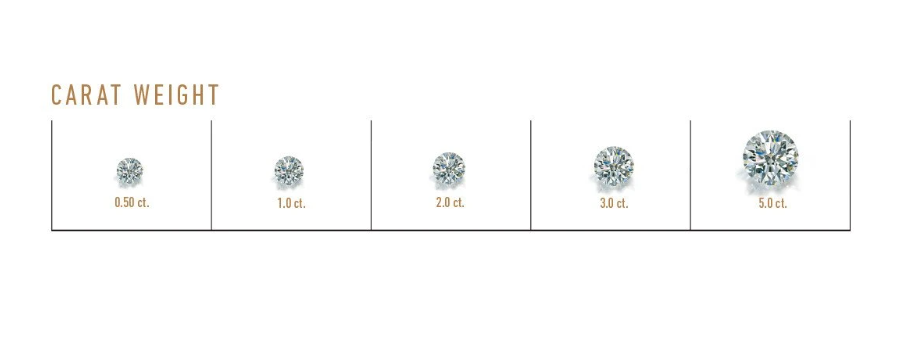
Carat weight comparison: larger carat weights generally cost more, especially when combined with strong cut, color, and clarity.
Carat weight in finished jewelry
The same principle applies to mounted jewelry. The more diamonds a piece contains, the higher the total carat weight tends to be. Higher total carat weight typically means a higher price — but it must still be weighed against the quality of the diamonds and the craftsmanship of the piece.
Why carat weight can be confusing
Carat weight is not always represented truthfully in the marketplace. A piece tagged as “1ct” does not always mean the true total weight is exactly 1.00 carat, unless it is graded unmounted by a reputable source (such as GIA) or supported by transparent, trustworthy documentation.
Important: Once diamonds are mounted, exact weight is harder to confirm. Many sellers provide estimates — and those estimates may not match a reputable certificate.
The DHM difference
At Diamond History Museum, we believe in a direct manufacturer-to-retail experience. We operate and manage key stages of production — including cutting, manufacturing, setting, polishing, and distribution. That means we know exactly the quality of diamonds used, the number of stones, the total carat weight, and the manufacturing process behind every piece.
Trust, knowledge, and integrity — that is the foundation of Diamond History Museum, making jewelry only fit for HISTORY.
Want help choosing the right balance?
Speak with a specialist or explore the collection.